
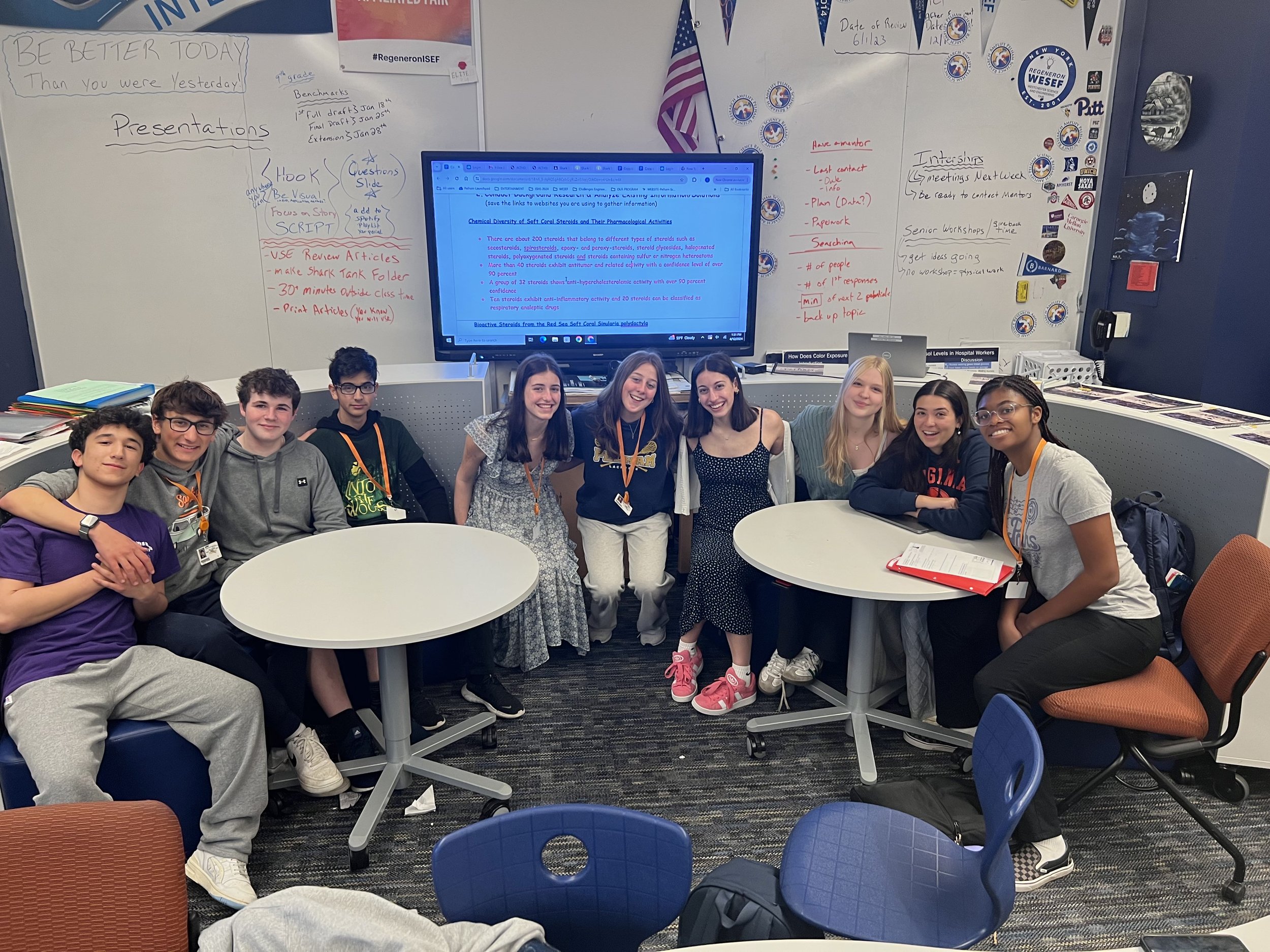
Nerdy. Fun. Unique.
Science Research gives students the opportunity to explore on their own terms.
Science Research Class Breakdown
Program structured by grades
9th Grade, Year 1: Exploration and Skill Development
Introduction to Research: Students begin by learning the foundations of scientific research, including the scientific method, ethics in research, and how to identify credible sources.
Topic Selection: They explore diverse fields of science to identify an area of personal interest, such as environmental science, biology, physics, or data science.
Literature Review: Students learn to find, read, and annotate peer-reviewed journal articles, building the critical skill of dissecting complex scientific studies.
Research Question Formation: By the end of the year, students formulate a well-defined research question based on their interests and gaps identified in the literature.
10th Grade, Year 2: Mentorship and Experimental Design
Finding a Mentor: Students are guided to connect with professionals, such as university professors or industry scientists, who can provide mentorship in their chosen field.
Experimental Planning: With their mentors, students design a research plan, considering variables, methodologies, and statistical analyses.
Initial Research: Students may start conducting preliminary experiments, data collection, or computational modeling under their mentor's supervision.
11th & 12th Grade, Year 3 & Year 4: Conducting Research, Analyzing Data, and Presentations
Execution of Research: This is the most hands-on phase, where students carry out experiments, collect data, and troubleshoot unexpected challenges.
Data Analysis: Students analyze their results using statistical tools and software, learning to interpret data and draw meaningful conclusions.
Refinement: With feedback from mentors and peers, students refine their methods and deepen their understanding of their topic.
Writing the Final Paper: Students compile their research into a formal paper, often modeled after academic journal articles, including abstract, introduction, methods, results, and discussion sections.
Presenting Findings: Students showcase their work at regional, national, or even international science fairs, symposiums, and conferences, such as the Regeneron International Science and Engineering Fair (ISEF).
Reflection and Growth: Throughout this year, students reflect on their journey, growth, and the skills they've gained, preparing for college-level research.
Important Dates
Wag-A-Thon - 2025
September 20th @ 10:00am-12:00pm
Location: 205 Elderwood Avenue
Regeneron WESEF Poster Competition - 2026
March 13, Set Up Day
March 14, Competition Day
March 18, Awards Ceremony
Location: Somers High School, 120 Primrose St, Lincolndale, NY 10540
Pelham Science Research Symposium, Shark Tank, and End of Year Celebration - 2026
June 11 @ 7:00 PM
Location: Gym @ Pelham Middle School, 28 Franklin Pl, Pelham, NY 10803
Somers Science Fair (Sophomores & Seniors) - 2026
June - TBD
Location: Somers High School, 120 Primrose St, Lincolndale, NY 10540
Pelham Senior PowerPoint Symposium - 2026
January 28, @ 6:00 PM
Location: Pelham High School Auditorium and Science Wing
The research program is student driven, from start to finish. From picking their field to networking with potential mentors to submitting professional research papers, their passion decides what comes next. Dedicated research teachers are here to guide student energy and help them be whatever they want to be.
With Pelham Science Research, students make their own journey.
Research extends beyond what students can learn in class
FAQs
-
Like any class, your child should talk to their guidance counselor. There are no prerequisites to join the Research program as a rising 9th grader.
We are an inclusive program and we do our best to give every student opportunities in Science Research. Reach out to Mr. Beltecas through our contact form here.
-
There are no prerequisite requirements for rising freshmen who will be entering the Research Program in September.
Research students have different summer requirements by age:
Rising sophomores will read journal articles within the field of their choice.
Rising juniors and seniors have internship requirements that must be completed in order to continue their journey. -
The process of finding a mentor is guided by our teachers over the course of the school year.
All students are ultimately responsible for using their connections and/or time and effort to find a professional in their field of choice who can serve as a mentor. More details can be found in this document.
-
AMPLIFY Pelham Science Research, Inc. is an association of faculty, parents, community members, education-supporting organizations, alumni and students committed to enhancing the Science Research Program at Pelham Memorial High School.
If you are interested in contributing to AMPLIFY, click here.
If you are interested in joining AMPLIFY, reach out to us through our contact form.
-
The Pelham Science Research Community is always looking to get more people involved. Whether you want to share your expertise, volunteer your time, become a mentor, or anything in between, reach out to us using our contact form! We look forward to growing our community with you :)